
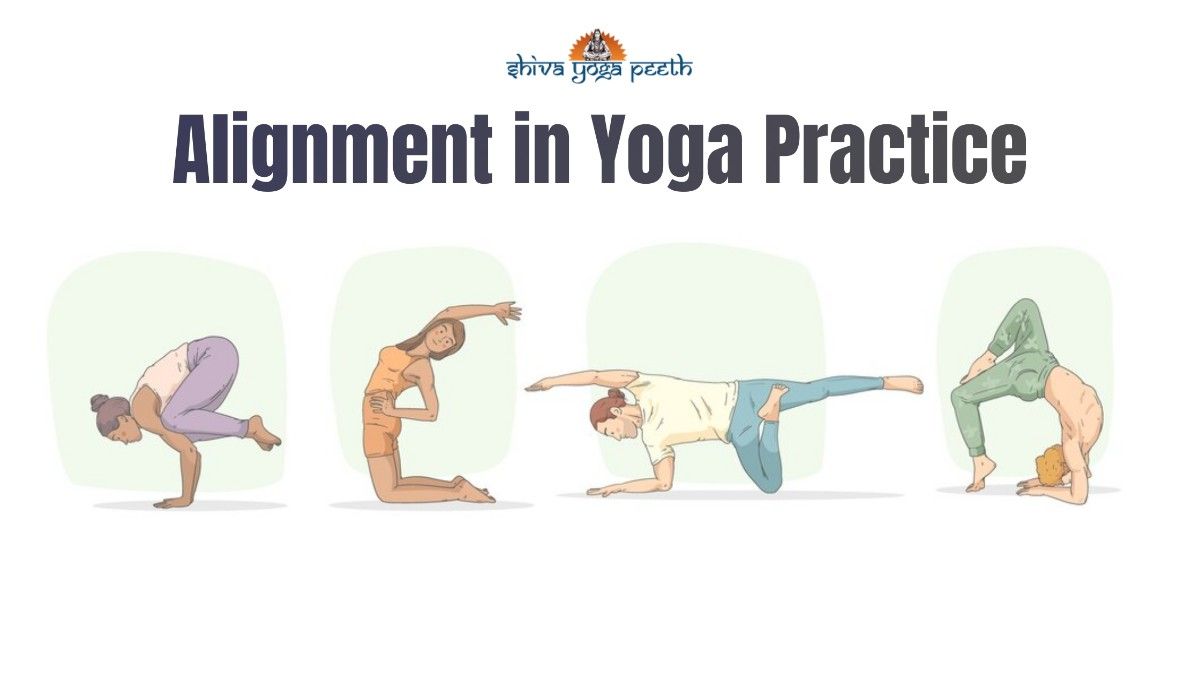
Yoga is much more than flexibility and fitness; it is a conscientious practice that emanates from awareness, precision, and respect for the body. During yoga teacher training, one must know about alignment and safety, not only for personal practice but also in order to teach others responsibly. A well-trained yoga teacher has to know how and why a posture works to help students practice safely while receiving the full benefits of yoga.
Alignment and safety are the building blocks for every professional yoga teacher training in India at Shiva Yoga Peeth to build confidence, credibility, and competence among budding teachers.
Understanding Alignment in Yoga Practice
Alignment in yoga means assuming the proper positions of your body in every asana for optimum benefit without creating possibilities for injuries. Proper alignment brings out joint support, protection of the spine, and the muscles in a balanced fashion.
In yoga anatomy and alignment, students learn how bones, muscles, ligaments, and joints interact with each other both in movement and stillness. By knowing this, one can:
- Practice asanas more effectively
- Avoid unnecessary strain
- Improve postures and body awareness
- Progress safely into advanced postures
Alignment is not about rigid rules; it is about adapting postures to suit the individual structure of one’s body.
Why Alignment Is Crucial in Yoga Teacher Training
A strong understanding of the aspects of yoga teacher training alignments is the key to distinguishing a good teacher from an ordinary teacher. By understanding alignments, the teacher can effectively guide his students.
The key reasons why alignment is paramount in yoga teacher training include:
- Preventing short-term and long-term injuries
- Supporting Students with Physical Limitations
- Increasing the therapeutic value of yoga
- Building trust between teacher and student
The principles of proper body alignment techniques are introduced gradually. The trainees learn both traditional and modern approaches.
The Importance of Safety in Yoga Teacher Training
This safety concern is inherent to any form of alignment. “Yoga is a relatively safe practice, but with improper instruction or anatomical knowledge, injury can occur in any class setting.”
- “A well-rounded yoga teacher training program will stress the importance of safety by teaching such things as:
- Contraindications of specific postures
- safe sequencing of asanas
- Injury prevention strategies
- Modifications and the usage of props
- How to observe and correct the misalignment
With priority given to safety issues in this part of the lesson context, future teachers need to be proficient enough to create an inclusive lesson that will be favourable for beginners, elderly people, and students who
Yoga Anatomy and Alignment: The Science Behind the Practice
Understanding yoga anatomy and alignment empowers teachers to move beyond memorization of poses. Instead, they learn why certain movements feel stable, and others feel restrictive.
Anatomy education in professional yoga teacher training programs generally includes:
- Skeletal structure and joint mechanics
- Muscle activation and deactivation
- Spinal alignment and movement patterns
- Common postural imbalances
- Breath mechanics and their role in stability
At Shiva Yoga Peeth, anatomy is taught in such a practical way, relating it to yoga, that even the most complex concepts will be easily understandable and applicable on the mat.
Alignment-Based Teaching Builds Confident Yoga Teachers
Confidence in teaching comes from knowledge. When teachers understand alignment and safety, they can:
- Teach mixed-level classes with ease
- Provide intelligent verbal cues
- Make safe, practical adjustments
- Answer student questions clearly
- Modify classes to accommodate different body types.
This is the confidence that professional yoga teacher training in India provides for the candidates, who mostly teach both within and outside their countries.
Alignment in Advanced Asanas: How Important Is It?
Advanced postures are not about extreme flexibility, and they really rely a lot on alignment and stability. Poor alignment in advanced poses greatly increases the risk of injury to the shoulders, knees, and lower back.
Through alignment-focused yoga teacher training, students learn:
- Body Preparation-Step by Step
- Safe entry and exit techniques
- Proper use of strength and flexibility
- When to discourage certain postures
This knowledge ensures that teachers guide the students responsibly and not in the performance of unsafe practices.
Shiva Yoga Peeth’s Approach to Alignment & Safety
Shiva Yoga Peeth is also recognized for offering authentic, professional, and yogic yoga teacher training in India, deeply rooted in yogic traditions, while imbued with the insights of the latest scientific knowledge in human anatomy.
To begin, traditional alignment principles of classical yoga include the following
- Modern anatomy teaching methods
- Individual attention and corrective guidance
- Safe hands-on adjustment techniques
- Ethical and Responsible Teaching Practices
Such an approach makes students knowledgeable, compassionate, and aware safety teachers.
Alignment and Safety: A Lifelong Learning Process
Alignment and safety: a process, not a one-time lesson; bodies change, we need to learn to adapt to different conditions and different teachers: our own.
Graduates coming from a yoga teacher training program that focused on yoga asanas may be more likely to:
- Evolve their teaching style
- Support long-term student practice
- Maintain own physical health
- Build a sustainable teaching career
This is why alignment education remains a key focus at Shiva Yoga Peeth, including beyond the basic level of certification.
Conclusion
Alignment and safety play an immense role in yoga teacher training that cannot be emphasized enough. Deep comprehension of yoga anatomy and alignment makes sure yoga gets practiced as a healing, empowering modality and not a hazardous gymnastic activity.